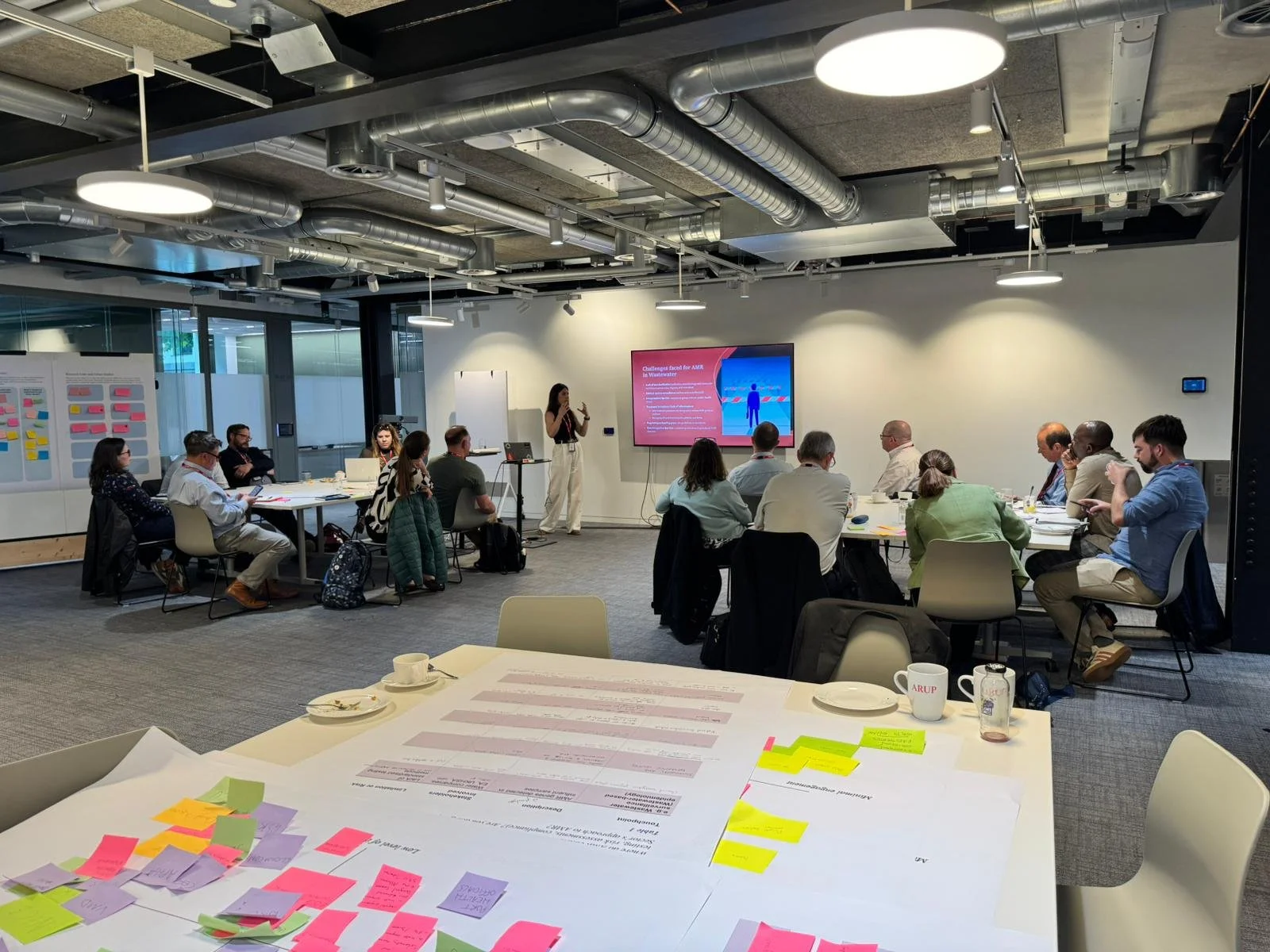
In June 2025 the Digital Health Hub for AMR convened a cross-sector stakeholder workshop focused on the role of the UK water sector in antimicrobial resistance (AMR) surveillance and mitigation. Held in collaboration with UKHSA, UKCEH, Bangor University and industry partners including water companies and regulators, the event brought together a wide range of experts from public health, academia, environmental science, and infrastructure planning.
The day-long workshop featured a series of breakout activities, presentations, and collaborative exercises to map the current position of the water sector in relation to AMR, assess monitoring innovations, and draft policy recommendations to support future action.
Discussions centred around key challenges for implementing AMR surveillance in wastewater systems. Questions were raised around sustainable financing models - particularly, who will pay for long-term surveillance, as well as the need for agreed protocols and standards. Stakeholders highlighted gaps in sampling frequency, locations, and thresholds for response, as well as the need for clarity around ownership and governance of any surveillance system.
Participants also raised the issue of infrastructure and workforce capacity, noting the importance of developing the sample processing, data analysis, and reporting capabilities to support a functional AMR surveillance pipeline. Stakeholders also shared examples of transferable innovations and good practice already underway, including genomic tools, data dashboards, and multi-agency partnerships.
Dr Jordan Sealey, Postdoctoral Researcher at Bangor University commented: “This workshop marks an important step in aligning the water sector with national AMR objectives. It was really encouraging to see a strong recognition and willingness for cross-sector collaboration and the need for regulations to direct and support AMR wastewater surveillance.”
The outputs of this workshop will be summarised into a short report, outlining key themes, opportunities, and recommendations for guiding future action in the upcoming months.