Quantum leap in Wastewater surveillance: Portable Nanodiamond sensors promise rapid pathogen detection
A new study published in Nature Communications unveils a transformative approach to wastewater-based epidemiology (WBE), offering ultra-sensitive, rapid, and field-deployable tools for detecting pathogens like SARS-CoV-2. Developed by researchers at University College London and Bangor University, the study explores two complementary nanomaterial-based approaches to create dipstick assays capable of detecting viral fragments directly at the source.
Unlike traditional PCR methods that require centralised labs and lengthy turnaround times (24–72 hours), this "lab-in-a-suitcase" system delivers results in just two hours. The team’s findings suggest that carbon black nanoparticles are comparable to traditional gold particles in a lateral-flow-test format, yielding 80 and 82% sensitivity respectively and 100% specificity. Moreover, nanodiamonds achieved 100% sensitivity and 100% specificity.
This work holds immense promise for near-source surveillance in resource-limited settings such as prisons, care homes, and refugee camps, where early pathogen detection can reduce transmission and prevent outbreaks. The technology is cost-effective, portable and adaptable beyond virus detection, allowing monitoring of a wide range of targets such as antimicrobial resistance genes, making it a vital tool for global public health and reducing AMR risks.
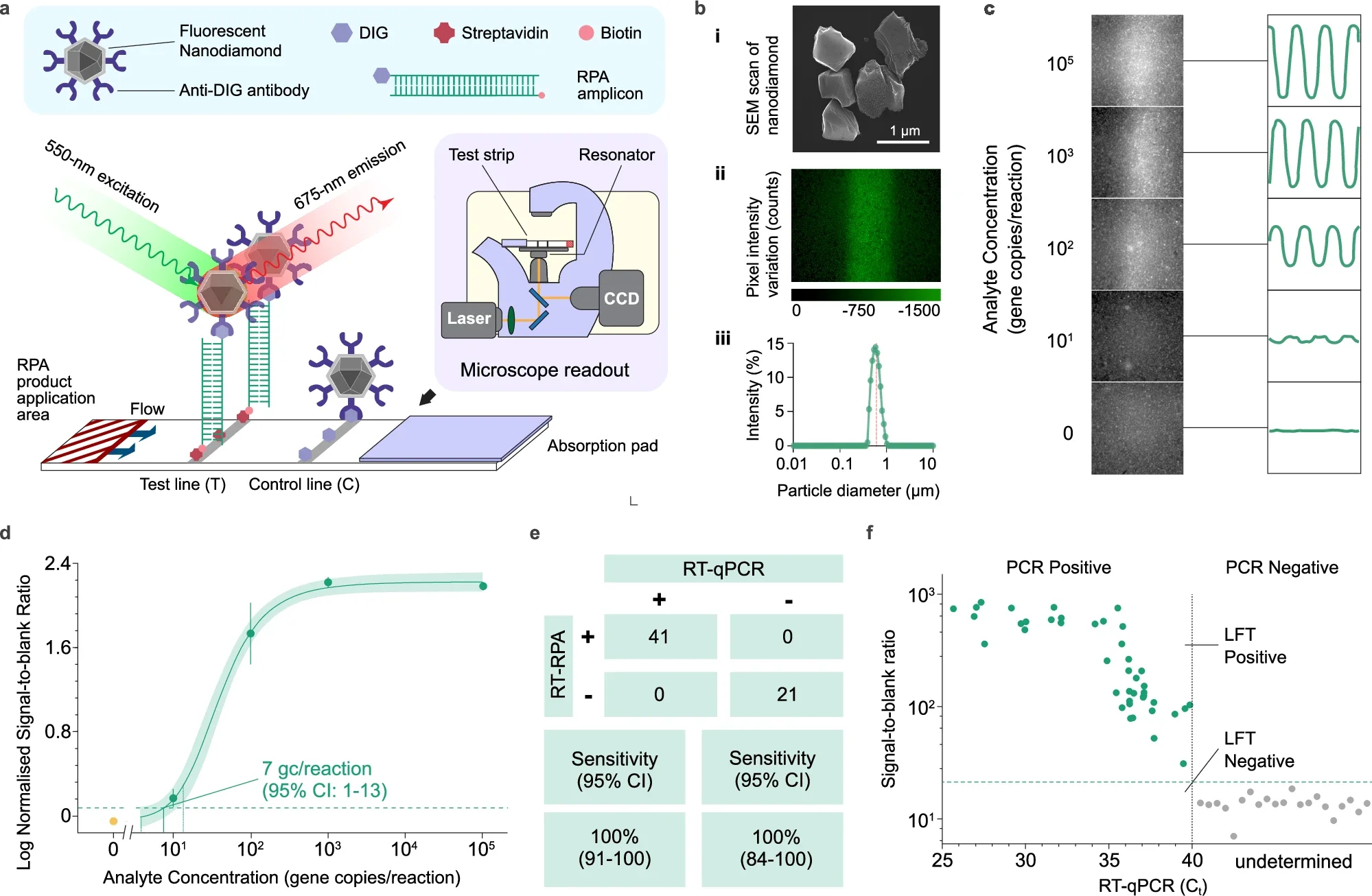
(From publication) - Development of RPA-dipstick assay with fluorescent nanodiamond particles (RPA-dipstick-FND) for rapid SARS-CoV-2 detection in wastewater.