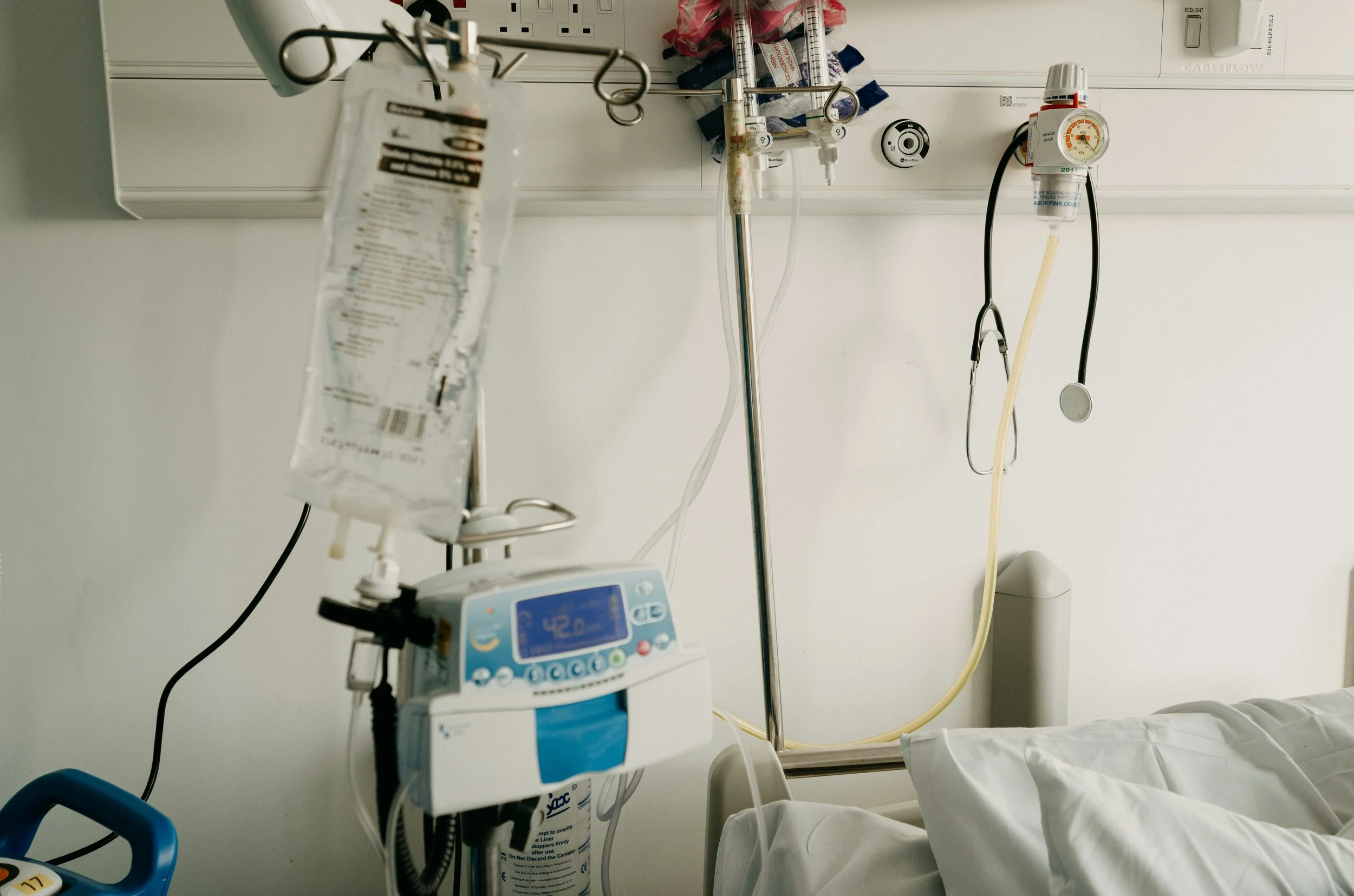
AI tool could help clinicians spot patients ready to switch from IV to oral antibiotics
Researchers from the Digital Health Hub for Antimicrobial Resistance in collaboration with RADIX (Real-time Antimicrobial Digital Intervention eXchange) programme, Nel Swanepoel and Steve Harris from UCL’s Institute of Health Informatics, as well as Akish Luintel and Emma McGuire from UCLH’s Department of Medical Microbiology, have developed a machine learning system that helps hospital teams identify patients who may be ready to move from intravenous (IV) to oral antibiotics - the study was recently published in Nature Communications.
Switching to oral treatment as soon as it is safe can shorten hospital stays, reduce catheter-related infections and lower costs. Yet around one in five patients in England stays on IV antibiotics after meeting the criteria for a switch. Reviews can be easy to miss on busy wards, and antimicrobial stewardship teams cannot see every eligible patient.
The new system takes a different approach from earlier tools. Rather than learning from past prescribing decisions, which can reproduce existing delays, it forecasts how each patient's vital signs (heart rate, respiratory rate, oxygen saturation, blood pressure and temperature) are likely to change over the next 12 hours. It then checks those forecasts against clinical criteria for stability and ranks patients by how likely they are to be ready for review. Clinicians can inspect the forecasts behind each ranking, and the criteria can be updated as and when guidelines change, without retraining the model.
The team tested the approach on data from 10,584 admissions to University College London Hospitals (UCLH) and 6,333 intensive care admissions from a US-based hospital. Looking at the five patients ranked highest each day, the system identified 2.2 times more patients who were ready for review than random selection in the UCLH data, and 3.2 times more in the US data.
The system is designed to support clinicians, not replace them. It assesses only whether a patient is physiologically stable and whether oral treatment is appropriate - the final decision to switch is ultimately decided by the clinical team. Next steps will be to test the system in clinical practice to see whether it increases switching rates and improves patient outcomes.
Vasileios Lampos, Associate Professor of Computer Science, UCL, said: "This study is a good example of how we can move from AI research to solutions that have a clear clinical purpose. By working closely with our colleagues at UCLH, we have been able to take expertise in AI and address a very practical problem in antibiotic treatment. This kind of collaboration, bringing together computer scientists and clinicians from the outset, can make a meaningful contribution to healthcare."
Magnus Ross, Postdoctoral Researcher, UCL added: "In this work we focussed on solving a real pain point for clinicians. Instead of building a system to replace decision making, we instead use machine learning to identify patients they might have missed when considering antibiotic switches and flag them for review. This design keeps the final say with the clinician, whilst helping to decrease the number of patients on IV antibiotics with potentially harmful side-effects."
Dr Akish Luintel, Consultant in Infectious Diseases and General Medicine at UCLH also commented: "On a busy ward, it is easy for a patient who is ready for oral antibiotics to be missed at review. A tool that highlights those patients and shows us the vital sign trends behind its suggestion, helps us focus our time where it is most likely to make a difference. The decision stays with the clinical team, who know the patient and the wider picture, and furthermore - getting patients off IV treatment sooner is better for them and helps improve antimicrobial stewardship."
Optimising antibiotic switching via forecasting of patient physiology can be found here: https://doi.org/10.1038/s41467-026-76715-w